The Freelance WordPress Model Is Broken — Here Is What Smart Developers Are Doing Instead
 Agentic Community
Apr 14, 2026
4 min read
Agentic Community
Apr 14, 2026
4 min read

The freelance WordPress model has a ceiling.
You can only take on so many clients. You can only bill so many hours. At some point, the business you built stops growing and starts constraining. More revenue means more work, and more work means less of everything else.
Most freelancers accept this as the nature of the job. It isn’t.
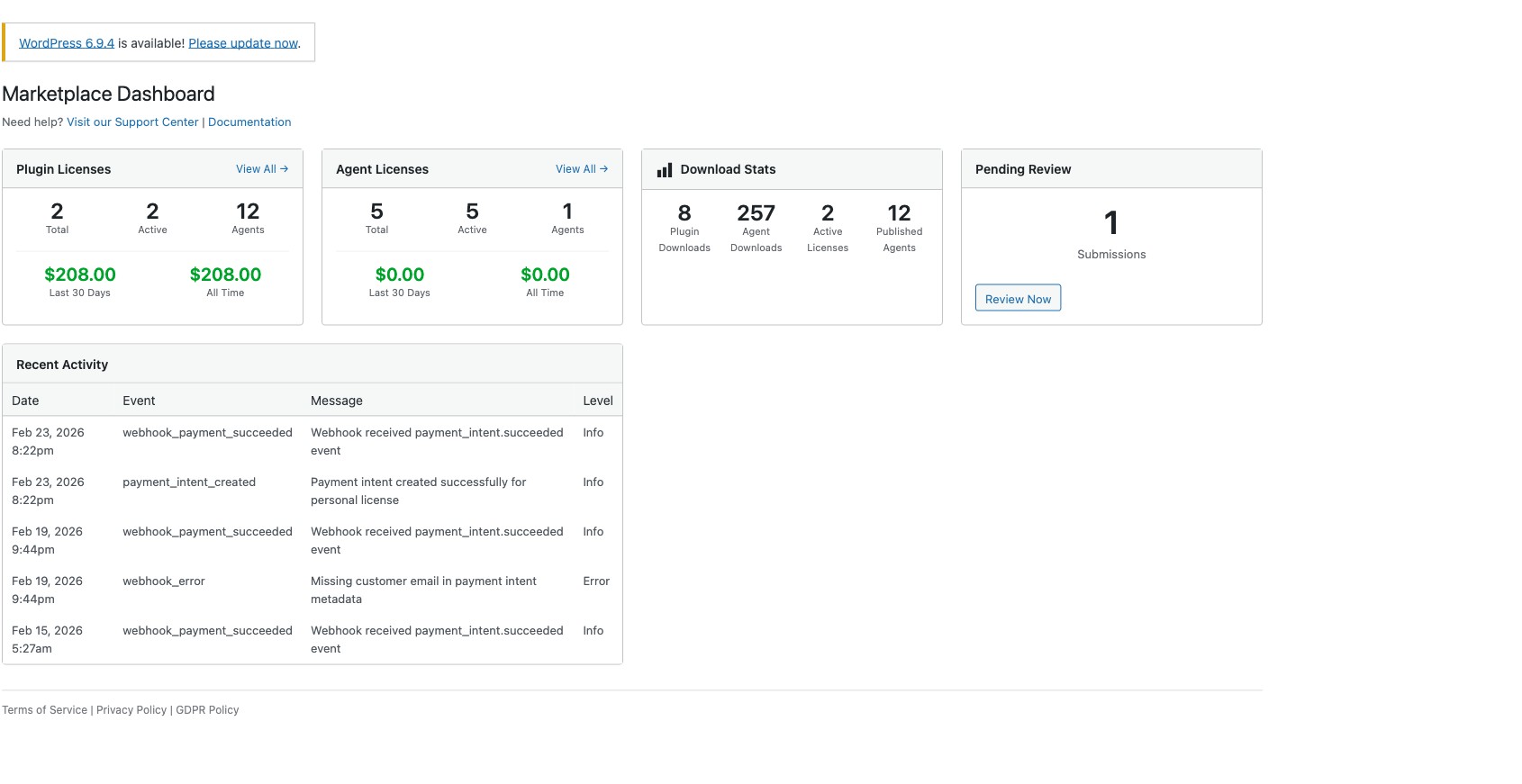
The developers who built plugin businesses in the early days of WordPress found a different model: build once, sell indefinitely. They aren’t doing client calls. They’re watching Stripe dashboards.
AI agents are opening that same door again — and freelance WordPress developers are positioned better than almost anyone to walk through it.
What You Already Have
A working WordPress freelancer already has the three things that are genuinely hard to acquire:
Solved problems. Every client engagement is a problem-solving exercise. Over years of client work, you accumulate solutions — things you’ve automated, scripts you’ve built, processes you’ve developed. Some of those solutions are unique. Most aren’t — which means other people have the same problem and would pay to have it solved for them.
Domain knowledge. Freelancers who specialise — WooCommerce, real estate, membership sites, healthcare — understand their vertical at a depth that generalists don’t. That understanding is what separates a specialist AI agent from a generic one. The difference is worth money in the marketplace.
Technical credibility. The Agentic Marketplace review process rewards developers who understand WordPress architecture, security practices, and clean code. You already do.
You’re not starting from zero. You’re productising what you already know.

The Real Comparison
Run this comparison honestly.
A client website project: discovery and proposals before billing starts; 40–80 hours of development; unpredictable revision cycles; one payment when it’s done; margin decreases with every change request.
An AI agent in the marketplace: 20–40 hours to build the first version; a structured review process; recurring revenue from every new sale; margin improves over time as reviews accumulate and the agent matures and stabilises.
The agent requires more upfront discipline — you’re building a product, not a custom solution — but the economics are fundamentally different. One model pays you once. The other pays you indefinitely for the same work.
The White-Label Angle
There’s a version of this that integrates directly with your existing client business.
Agencies and freelancers who build AI agents can deploy them as part of their service delivery. Build a site audit agent, use it on every client engagement, and also list it in the marketplace. The same work generates client value and passive revenue simultaneously.
The white-label option goes further. Agencies will pay for branded agents — tools they can offer under their own name to their client base. An agent built for one purpose can be licensed to an agency, generating revenue without you touching the client relationship at all.
This is the software business model applied to agency work. The best agencies have already made this transition with plugins and proprietary tools. AI agents are the next iteration.
What Realistic Revenue Looks Like
Here’s what a realistic freelance developer’s agent portfolio looks like over three years:
Year 1: Build one specialist agent. Price it at $49 one-time. Reach 30 sales per month by year-end. Monthly revenue: roughly $1,030. That’s not retirement money, but it’s a significant payment that arrives without a client call.
Year 2: Iterate the first agent based on user reviews — it improves measurably. Build a second agent in an adjacent niche. Total: 80–100 sales per month. Monthly revenue: $2,700–$3,400.
Year 3: A small portfolio of 3–4 agents, the first of which now has 300+ installs and category authority. Monthly revenue: $5,000–$8,000+.
This compounds in a way that client work doesn’t. The third year of a client business is often harder than the first. The third year of a product portfolio is almost always more profitable.
How to Start Without Abandoning Client Work
You don’t quit freelancing to build agents. You allocate time differently.
The most practical approach: treat your first agent as a 20-hour project. One focused sprint. One specific problem you’ve solved repeatedly for clients, encoded into an AI agent that can solve it for anyone who needs it.
Use existing client problems as R&D. The next time a client asks about something you’ve handled before, notice it. That’s a product specification. The solution you’ve already built is your agent’s first implementation.
Build during low-client periods. Submit it. Let it run. The first agent teaches you the process. The second takes half the time. By the third, you have a workflow — and an income stream that doesn’t require you to be present to operate.
The Window and What Comes After
The freelance developers who built plugin businesses in the early WordPress era did something simple: they noticed that a product business scales differently than a service business, and they built products while the category was uncrowded.
Most of their contemporaries kept taking client work because client work paid immediately. The product developers played a longer game and won it.
AI agents for WordPress are in the same early stage. The marketplace exists. The infrastructure is built. The buyers are there. The catalog of specialist agents isn’t.
If you’re a freelance WordPress developer, you have more than enough to build your first agent. The question is whether you treat it as an interesting side project or as the beginning of a fundamentally different kind of business.
New to the marketplace? Read how to build your first agent, then see why WordPress AI agents are a genuine passive-income stream.